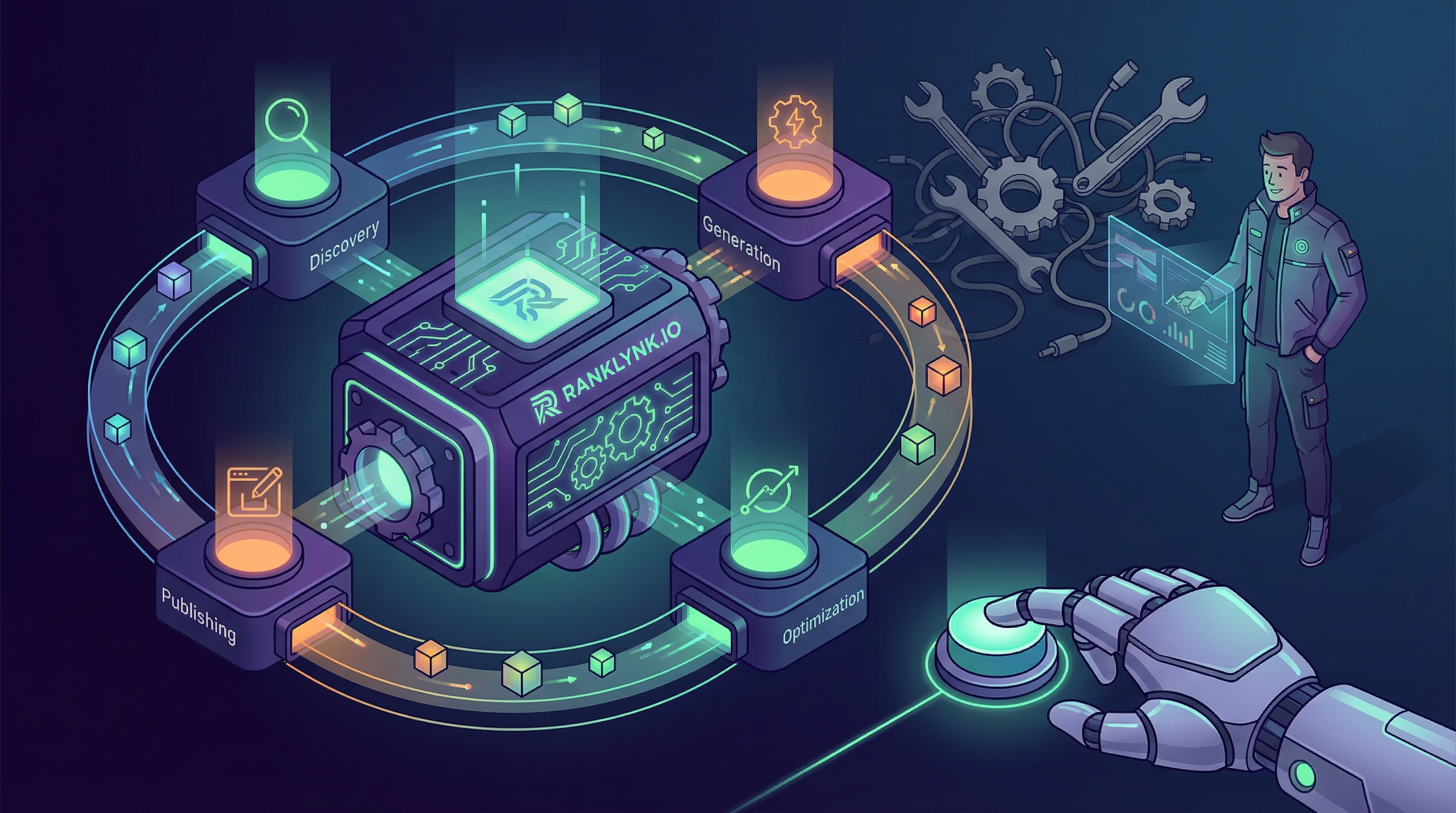
The Best Digital Marketing Platform for Small Businesses: Stop Managing Tools, Start Running a System
Most small businesses aren't losing to bigger competitors because of budget. They're losing because they're running six disconnected tools and calling it a strategy.
In 2026, the digital marketing platform landscape is more saturated than ever. From all-in-one suites to niche automation tools, small business owners and growth-focused founders are drowning in options — yet still manually stitching together workflows that should run themselves [1]. The promise of "easy marketing" has quietly been replaced by dashboard overload, bloated subscriptions, and zero compounding results. You're paying for five platforms, logging into all of them daily, and still wondering why pipeline isn't growing.
This guide breaks down what a real digital marketing platform for small businesses should actually do, which tools earn their place in your stack, and how the most efficient operators have stopped babysitting their marketing — by turning it into a closed-loop system.
What a Digital Marketing Platform Actually Needs to Do for Small Businesses
There's a hard line between a platform and a collection of tools. A collection of tools requires a human in the middle of every workflow. A platform is an engine — it receives inputs, executes processes, and produces outputs without someone manually pulling the levers.
The core functions every real digital marketing platform must cover: traffic acquisition, lead capture, nurture sequences, conversion tracking, and unified analytics. Strip any one of these out and you've got a gap that someone on your team will fill manually. At 5 clients or 5,000 monthly visitors, that's manageable. At 50 clients or 500,000 visitors, it's a full-time job you didn't budget for.
The hidden cost of fragmented stacks isn't just subscription fees — it's the compounding time drain, attribution errors that make data useless, and the missed optimization cycles that happen when no one is watching the right number at the right time.
System-thinking reframes this entirely: marketing should operate, not just exist.
The Problem with Stitching Tools Together
Manual integrations are the silent killer of small business marketing operations. Zapier connections break. API rate limits hit at the worst time. A field rename in your CRM corrupts two weeks of lead data. Every integration point is a failure point, and in a lean team, there's no one dedicated to monitoring them.
Data silos are the downstream consequence. When your SEO tool doesn't talk to your CRM, and your CRM doesn't talk to your analytics layer, attribution becomes guesswork. You stop knowing which channel is actually driving revenue — so you either spread budget thin or double down on the wrong thing.
Worse, every disconnected tool adds a babysitting task to someone's plate. That someone is usually the founder or the one overloaded marketing hire who was supposed to be running campaigns, not debugging webhook failures.
What 'All-in-One' Actually Means in 2026
True platforms in 2026 handle multiple channels under a single data layer. Not tabs that happen to live in the same dashboard — a unified data architecture where every action, contact, and conversion feeds back into the same intelligence engine.
The architectural distinction matters: automation-first platforms are built around workflows and triggers. Feature-first platforms are built around a UI checklist. One runs your marketing. The other just organizes it.
A dashboard is where you go to see what happened. An engine is what makes things happen. The best digital marketing platforms for small businesses are engines.
Core Categories of Digital Marketing Tools Small Businesses Need
Before evaluating specific platforms, map your stack to outcomes. Most founders make the mistake of selecting tools by feature ratings. The right lens is category coverage mapped to business outcomes: does this category of tool directly drive revenue, and is the tool in that category doing it autonomously?
The non-negotiable categories: SEO and organic content, CRM and email automation, social and paid channels, and analytics. Each category maps to a specific growth function. Miss one, and you've got a gap in your funnel that someone is plugging manually.
SEO and Organic Content Infrastructure
Organic search is the only channel that compounds without continued spend. Every other channel — paid, social, influencer — goes dark the moment you stop funding it. SEO builds an asset. Done right, the traffic you earn in month three is still arriving in month thirty.
But most small businesses treat SEO as a task, not a system. They publish a blog post when someone has time. They keyword-research when they remember to. They never close the loop between what's ranking and what's converting.
Real SEO infrastructure treats keyword discovery, content generation, publishing, and optimization as a single automated pipeline. The shift from manual SEO tasks to an autonomous SEO engine isn't a luxury for enterprise teams — it's the only way a lean operator can compete on organic without a content team.
CRM and Email Automation
Lead capture to nurture to close needs to be automated, or it's not a system — it's a hope [2]. Behavioral triggers beat manual campaign sends on every metric: open rate, conversion rate, and revenue per contact. The difference is that behavioral automation responds to what your leads actually do. Manual sends respond to what someone on your team remembered to schedule.
Tools like Keap [2], HubSpot [3], and ActiveCampaign each approach small business CRM differently, but the selection criterion is the same: how deeply can you automate the lead-to-close workflow without needing a marketing operations hire to maintain it?
Social and Paid Channel Tools
Paid amplification makes sense when you have a proven offer and a funnel that converts. It drains runway when you're using it to find product-market fit. Most early-stage small businesses reach for paid too early, before organic and email are producing pipeline.
Scheduling and creative tools earn their subscription fee when they eliminate manual posting and pull reporting into your analytics layer. They become overhead when they require manual upkeep to generate any value. Integration with your CRM and analytics layer is non-negotiable — social metrics that don't connect to revenue are vanity.
Best Digital Marketing Platforms for Small Businesses in 2026
Here's the direct evaluation most comparison posts won't give you: no platform does everything well. The goal is to identify which platform dominates the outcome that matters most to your business, and what you'll need to supplement.
HubSpot: The Enterprise Wrapper Small Businesses Grow Into
HubSpot [3] is the default CRM and email platform for a reason — the free tier is genuinely useful, the interface is polished, and the contact management is best-in-class for teams that haven't hired a RevOps specialist yet. The CRM core is strong. The email automation is solid. The reporting is better than most small businesses will use.
The ceiling appears when you scale. Paid tiers price by contact volume and feature unlock, and the cost curve gets steep fast. For agencies managing multiple client instances, the math gets painful. For SaaS founders scaling to tens of thousands of contacts, you'll hit a pricing wall before you hit a feature wall.
SEO is a feature inside HubSpot, not a system. You get a content editor, basic keyword suggestions, and page performance reports. You don't get a keyword-to-publish pipeline that runs itself.
Best for: Agencies and SaaS founders who need CRM-first marketing with room to grow.
Marketing 360: Built for Local and Small Business Operators
Marketing 360 combines paid ads management, CRM, and website tools under one roof — which is genuinely useful for local businesses that don't want to think about their stack architecture. It's closer to a managed service model than a self-serve platform. That's a feature if you want a vendor to run things. It's a liability if you want control.
Automation depth is limited compared to HubSpot or Keap. Reporting is surface-level. The integration story outside its own ecosystem is thin.
Best for: Local businesses that want a vendor relationship, not operators who want to build a system.
Keap: CRM and Automation for Service Businesses
Keap [2] is built for service-based small businesses with complex follow-up sequences and pipeline logic that most CRM tools don't handle well. The automation builder is more accessible than it looks, and the pipeline management is designed for operators who close deals over multiple touchpoints, not e-commerce transactions.
The tradeoff is UI polish and integrations breadth. Keap is purpose-built for its use case. If your business doesn't match that profile, it'll feel like the wrong tool.
Best for: Solo founders and small service teams with high-touch follow-up requirements.
Where Standalone SEO Platforms Fit In
Most all-in-one platforms treat SEO as a tab in your content editor — a keyword widget, a readability score, maybe a backlink count. That's feature theater, not SEO infrastructure.
The gap between having an "SEO tool" and having an autonomous SEO execution engine is massive. One tells you what to do. The other does it. For operators who can't afford a content team and can't spend 20 hours a week on keyword research and writing, the SEO infrastructure layer deserves its own dedicated engine — not a secondary tab in your CRM dashboard.
How to Evaluate a Digital Marketing Platform Without Getting Sold
Every platform demo is optimized to close you, not to inform you. Sales decks lead with feature counts and logo walls. The right evaluation framework cuts through that.
The 5 Questions Every Small Business Should Ask
1. Does it reduce manual tasks or just organize them? Organizing chaos is not the same as eliminating it. A platform that surfaces your tasks in a cleaner interface has not made your operation more efficient.
2. Can it scale without requiring you to hire to manage it? If using the platform at 10x your current volume requires a dedicated ops hire, it's not scaling your business — it's scaling your headcount.
3. Does it generate compounding value? SEO builds over time. Email lists grow and produce more revenue per send as they mature. Paid campaigns produce nothing the day you stop paying. Prioritize tools tied to compounding channels.
4. What does the integration layer look like at 10x volume? Native integrations with your CRM, analytics, and publishing tools need to survive growth without requiring custom engineering work.
5. Is the pricing model tied to your growth or punishing it? Per-contact pricing models penalize you for being successful. Understand where the price curve goes before you're locked in.
Total Cost of Ownership vs. Sticker Price
The subscription price is the smallest number in the total cost of ownership equation. Factor in onboarding time, training overhead, integration maintenance, and the workarounds your team will build when the platform doesn't do exactly what you need.
For startups burning runway, the agency cost vs. platform cost math is decisive [1]. A $3,000/month agency retainer might produce results faster than a $300/month platform — or it might produce activity reports with no compounding value. The question is whether the platform automates enough to replace the agency output without the ongoing cost.
The SEO Layer Most Digital Marketing Platforms Get Wrong
Every platform puts a blog tab somewhere in the product. Most add a keyword difficulty widget and call it SEO. Neither is a system. Both create the illusion of SEO activity without producing the compounding organic growth that makes SEO valuable in the first place.
Real SEO infrastructure requires four connected functions: discovery, generation, publishing, and continuous optimization. Break the chain at any point and you've reintroduced manual work. Most platforms break it at every point.
Why Content Output Is the Bottleneck for Small Business SEO
Organic growth is a volume and consistency game [4]. One well-optimized post per month is not a content strategy — it's a placeholder. The businesses ranking across high-intent keyword clusters are publishing systematically, optimizing based on performance data, and closing the loop between what ranks and what converts.
Most small businesses can't staff for that. A full-time content manager plus a writer plus an SEO specialist is a $200,000+ annual investment. The alternative isn't doing less SEO — it's running SEO on a system that doesn't require human intervention at every step.
What an Autonomous SEO Engine Looks Like
A closed-loop SEO system runs like this: keyword discovery identifies high-intent, achievable targets → content generation produces optimized drafts → publishing deploys without manual handoffs → performance monitoring tracks rankings, traffic, and conversions → optimization cycles back to update underperforming content automatically.
No content calendar babysitting. No manual task handoffs between tools. No human required to trigger the next cycle. If you're building a product and need organic traffic to grow while staying focused on what you actually built, see how it works — this is what SEO that runs itself looks like in practice.
The operators scaling organic traffic without a content team haven't found better willpower. They've built better systems.
Building a Lean Digital Marketing Stack That Actually Compounds
The minimum viable marketing stack for a small business or early-stage startup is not the cheapest combination of tools. It's the combination that produces compounding results with the minimum amount of human maintenance.
The Minimum Viable Marketing Stack for Startups and Small Businesses
Three layers: one SEO engine, one CRM and email platform, one analytics layer.
The SEO engine handles all organic content operations — keyword discovery through publishing through optimization — without requiring a content team. The CRM and email platform automates lead capture, nurture sequences, and pipeline management. The analytics layer unifies performance data across both channels so decisions are made on signal, not gut.
Everything else is optional until these three layers are producing compounding results. Ruthlessly cut any tool that requires manual maintenance to generate value. If someone has to log into it every week to keep it producing output, it's not a system — it's a subscription you're managing.
How to Sequence Platform Adoption Without Blowing Your Runway
Start with organic and email. They're the two compounding channels. They build assets that appreciate over time. And they produce the data you'll need to make paid amplification efficient when you eventually add it.
Layer in paid only after organic is producing pipeline. Using paid to fill gaps before organic is working is burning runway on a channel that produces nothing the day you stop spending.
Avoid platform lock-in by auditing integration dependencies before you commit. The question isn't whether you can get your data into a platform — it's whether you can get it out when you need to migrate. Check the export formats, the API availability, and what happens to your automations if you switch CRM providers in eighteen months.
The Bottom Line
The best digital marketing platform for small businesses isn't the one with the most features. It's the one that runs the most of your marketing without you in the loop.
In 2026, the gap between operators who are scaling and those who are stuck comes down to systems vs. tasks. The founders and agencies winning on organic aren't publishing more manually — they've automated the pipeline from keyword to published content to performance loop. The ones winning on email aren't crafting better campaigns — they've built behavioral sequences that run on triggers, not calendars.
The right stack compounds. The wrong stack just keeps your inbox full.
Stop stitching tools together and start building an engine. Pick the CRM that automates your follow-up without a hire. Pick the analytics layer that gives you signal, not noise. And for SEO — the one channel that builds real long-term equity — don't settle for a keyword widget in your CRM dashboard. Automate your SEO with a system built specifically for operators who don't have a content team and can't afford to babysit a content calendar. That's the stack that scales.
Frequently Asked Questions
Q: What is a digital marketing platform for small businesses and how is it different from a collection of tools?
A digital marketing platform for small businesses is an integrated system that handles traffic acquisition, lead capture, nurture sequences, conversion tracking, and unified analytics under a single data architecture. The key difference between a platform and a collection of tools is automation and integration. A collection of tools requires a human to manually connect workflows, transfer data, and monitor each system individually. A true platform operates like an engine — it receives inputs, executes processes, and produces outputs without someone pulling the levers at every step. In 2026, many small businesses mistake having five or six subscriptions for having a strategy. But disconnected tools create data silos, attribution errors, and compounding time drains that make growth harder, not easier. A real platform eliminates the gaps between functions so your marketing operates continuously rather than just existing.
Q: Why do small businesses struggle with fragmented digital marketing tool stacks?
Fragmented digital marketing stacks hurt small businesses in several compounding ways. First, manual integrations between tools — through platforms like Zapier or custom APIs — are frequent failure points. A broken webhook or a renamed CRM field can corrupt weeks of lead data with no one noticing. Second, data silos make attribution nearly impossible. If your SEO tool doesn't communicate with your CRM, and your CRM doesn't feed your analytics layer, you can't accurately identify which channels are actually driving revenue. This leads to either spreading budget too thin or investing in the wrong channels. Third, every disconnected tool adds a monitoring and maintenance task to someone's plate — usually the founder or a single overloaded marketing hire. The hidden cost isn't just subscription fees; it's the lost optimization cycles, wasted ad spend, and strategic blind spots created when no one is watching the right metrics at the right time.
Q: What core features should a digital marketing platform for small businesses include?
At minimum, a digital marketing platform for small businesses must cover five core functional areas: traffic acquisition, lead capture, nurture sequences, conversion tracking, and unified analytics. Removing any single one of these creates a gap that will be filled manually — which is unsustainable as your business scales. Beyond features, the architecture matters. The best platforms share a single data layer across all functions, meaning every contact, action, and conversion feeds back into the same intelligence engine. This unified structure makes automation reliable and attribution accurate. In 2026, the distinction to prioritize is automation-first design versus feature-first design. Automation-first platforms are built around triggers and workflows that run your marketing. Feature-first platforms simply organize your marketing into a cleaner dashboard. For small businesses with lean teams, automation-first is the only sustainable path.
Q: How do I know if my current digital marketing setup is costing my small business more than it's saving?
There are several clear warning signs that your current digital marketing setup is working against you. If you or your team are logging into multiple dashboards daily just to monitor basic performance, that's a system problem. If you've experienced broken integrations, missing lead data, or attribution gaps that left you guessing which channel drove a sale, your stack is fragmented. If your marketing hire spends more time debugging tool connections than running actual campaigns, you're paying for operational overhead rather than growth. The cost calculation goes beyond monthly subscription fees. Factor in the hours spent on manual tasks, the budget wasted on channels you can't accurately attribute, and the optimization opportunities missed because no one had time to analyze the data. If your marketing exists but doesn't operate on its own, it's time to evaluate a more unified digital marketing platform for small businesses.
Q: What does 'all-in-one' actually mean for a digital marketing platform in 2026?
In 2026, 'all-in-one' has become an overused term that doesn't always reflect genuine platform integration. A truly all-in-one digital marketing platform for small businesses means multiple channels and functions are managed under a single data layer — not just organized inside the same user interface. The distinction is architectural. Many platforms market themselves as all-in-one because they offer email, social, and CRM tabs in a shared dashboard. But if those features don't share data natively — if a contact's email behavior doesn't automatically inform their CRM score or trigger a retargeting campaign — they're still functionally siloed. A genuine all-in-one platform in 2026 ensures that every action a contact takes, across every channel, feeds back into one unified intelligence engine. This is what enables real automation, accurate attribution, and compounding marketing results without requiring constant manual oversight.
Q: How should small business owners evaluate and choose the right digital marketing platform?
The most effective approach is to map potential platforms to outcome categories rather than feature checklists. Many founders make the mistake of selecting tools based on star ratings or feature counts. The better lens is category coverage: does this platform cover traffic acquisition, lead capture, nurture, conversion, and analytics without requiring external stitching? Start by auditing your current stack and identifying where manual steps currently live. Those manual steps are your biggest inefficiencies and the gaps a new platform should eliminate. Next, evaluate whether the platform is automation-first or feature-first in its architecture. Ask vendors specifically how data flows between modules — whether a lead captured through a landing page automatically enters a nurture sequence and updates CRM fields without a third-party connector. Finally, consider scalability. A platform that works for 5 clients should still work efficiently at 50 clients without requiring additional headcount just to manage the marketing tools themselves.
Q: Can a small business with a limited budget afford a proper digital marketing platform?
Budget is often cited as the reason small businesses stick with fragmented tool stacks, but the real cost comparison favors consolidation more often than not. Running five or six separate tools — each with its own monthly subscription — frequently costs more in total than a unified digital marketing platform for small businesses. When you factor in the hidden costs of manual labor, broken integrations, and misattributed ad spend, the gap widens further. In 2026, the digital marketing platform landscape offers options across a wide range of price points, including platforms built specifically for small businesses and startups. The key is to stop evaluating cost per tool and start evaluating cost per outcome. A single platform that reliably converts traffic into leads and leads into customers at a predictable rate will always outperform a cheaper but fragmented stack that leaks revenue at every integration point.
References
[1] https://www.salesforce.com/small-business/marketing/. salesforce.com. https://www.salesforce.com/small-business/marketing/
[2] https://keap.com/. keap.com. https://keap.com/
[3] https://www.hubspot.com/. hubspot.com. https://www.hubspot.com/
[4] https://mailchimp.com/marketing-platform/. mailchimp.com. https://mailchimp.com/marketing-platform/