How to Prove SEO Content ROI to Agency Clients (Without Spending Hours on Reports)
Your client just asked why they're paying $5,000/month for SEO content and traffic is up 40% but revenue
Frequently Asked Questions
Q: How do you prove SEO content ROI to agency clients when traffic is up but revenue hasn't visibly moved?
This is one of the most common challenges agencies face. A traffic increase of 40% is a strong leading indicator, but clients want to see the bottom-line impact. To bridge this gap, connect traffic data to revenue-adjacent metrics: track goal completions, form submissions, phone calls, and assisted conversions in Google Analytics. Use attribution modeling to show how SEO content influences the buyer journey even when it's not the last click. Present micro-conversions like email signups or demo requests that directly feed the sales pipeline. Over time, layer in closed deal data from the client's CRM to tie specific landing pages to actual revenue, making the ROI case undeniable.
Q: What metrics should agencies use to demonstrate SEO content ROI to clients?
The most persuasive metrics fall into three categories: visibility metrics (keyword rankings, impressions, organic traffic growth), engagement metrics (time on page, pages per session, bounce rate), and business impact metrics (leads generated, conversions, revenue influenced, cost per acquisition). Cost savings are also powerful — calculate what the equivalent paid traffic would cost using average CPC data from Google Ads. For example, if organic traffic brings 10,000 monthly visitors and the average CPC in your niche is $3, that's $30,000 in equivalent ad spend saved each month. Presenting a blend of these metrics tells a complete ROI story that resonates with both marketing-minded and finance-minded clients.
Q: How long does SEO content take to show ROI, and how do you manage client expectations in the meantime?
SEO content typically takes 3 to 6 months to show meaningful organic traction, and 6 to 12 months to demonstrate measurable revenue impact. Managing client expectations starts before the campaign does. Set clear timelines during onboarding, explain that SEO is a compounding investment, and establish milestone checkpoints. In the early months, report on leading indicators like indexation rates, keyword position improvements, and content performance trends. Use benchmarks to show progress relative to where the client started. Regular communication — monthly reports plus proactive updates when wins occur — keeps clients confident in the strategy even before the revenue numbers fully materialize.
Q: What is the best way to structure an SEO content ROI report for agency clients?
An effective SEO content ROI report should start with a brief executive summary that ties results directly to the client's business goals. Follow this with a performance dashboard showing key metrics: organic traffic, keyword rankings, conversions, and estimated revenue impact. Include a content performance breakdown so clients can see which specific pieces are driving results. Add a competitive context section showing how the client's visibility compares to competitors. Close with a clear next-steps section outlining what actions will be taken in the coming month. Keep the design clean and avoid overwhelming clients with raw data — narrative context explaining what the numbers mean is what converts skeptical clients into long-term retainers.
Q: How can agencies calculate the actual dollar value of SEO content results?
There are several reliable methods to calculate SEO content dollar value. The first is traffic value equivalency: multiply monthly organic sessions by the average cost-per-click for those keywords to estimate what the traffic would cost in paid ads. The second is lead-based ROI: track how many leads came from organic content, apply the client's average lead-to-close rate and average deal size, then calculate projected revenue. The third is direct attribution: use CRM and analytics integration to match closed deals back to first or last organic content touchpoints. Even a conservative attribution model showing that SEO content influenced $50,000 in pipeline against a $5,000 monthly retainer makes a compelling 10x ROI case that justifies the investment.
Q: What are the most common mistakes agencies make when reporting SEO content ROI to clients?
The most common mistakes include reporting vanity metrics without business context, such as focusing solely on impressions or rankings without connecting them to revenue. Another mistake is using overly technical language that confuses rather than convinces clients. Agencies also frequently fail to establish baseline data at the start of an engagement, making it impossible to demonstrate true progress over time. Reporting inconsistently — only sharing results when things look good — erodes client trust. Finally, many agencies neglect to show the compounding nature of SEO content, missing the opportunity to demonstrate how content published months ago continues to generate value. Fixing these mistakes makes ROI reporting a client retention tool rather than a monthly obligation.
Q: How do you use tools to make proving SEO content ROI faster and more efficient?
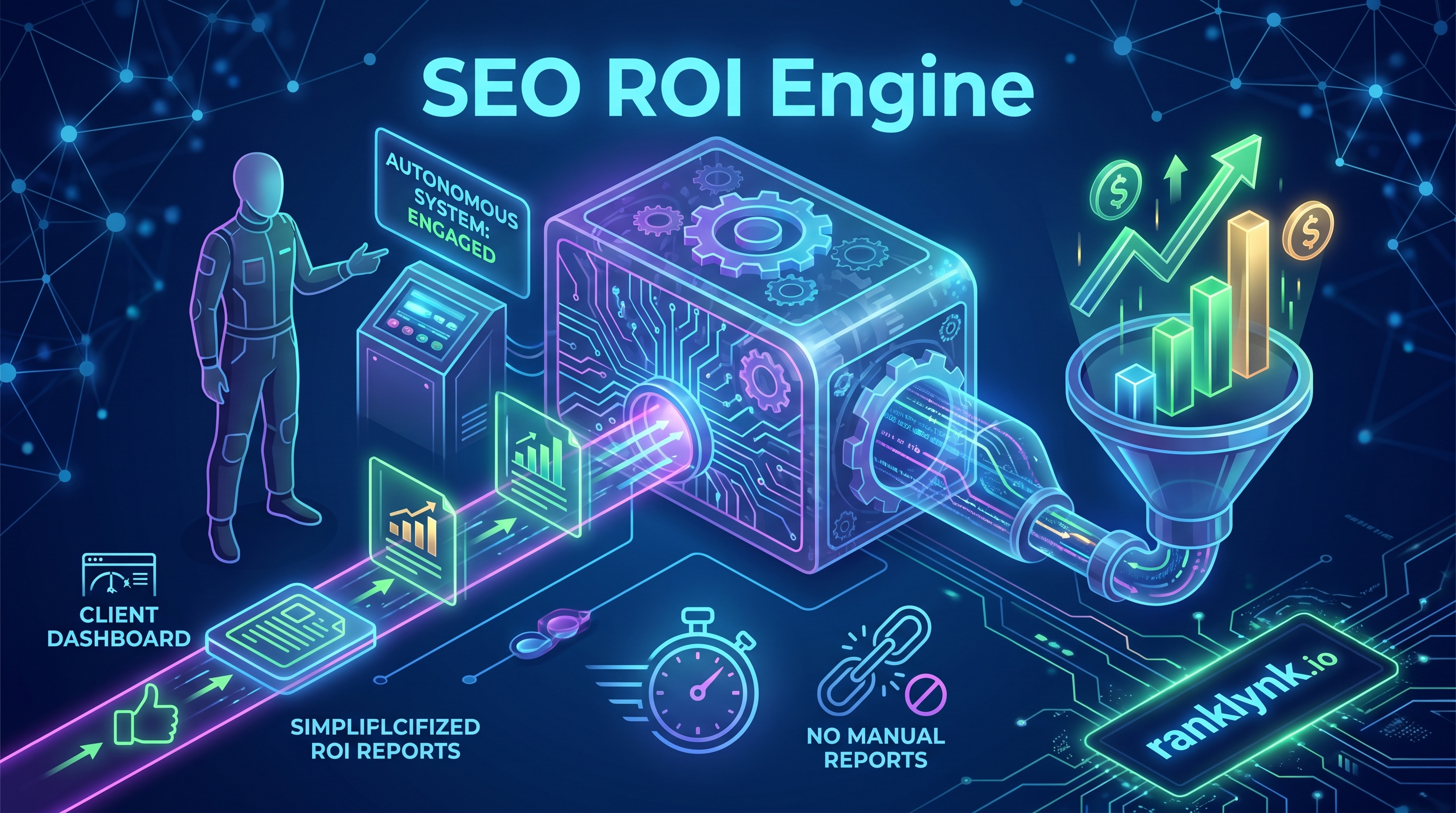
Agencies can dramatically reduce reporting time by using the right stack of tools. Google Analytics 4 and Google Search Console are free essentials for tracking organic performance and conversions. SEO platforms like Ahrefs, Semrush, or Moz provide keyword tracking and competitive benchmarking. For streamlined client reporting, tools like AgencyAnalytics, DashThis, or Looker Studio allow you to build automated dashboards that pull data from multiple sources and update in real time. CRM integrations with HubSpot or Salesforce let you close the loop between content and revenue. With automation in place, a comprehensive monthly ROI report that would take hours manually can be generated and reviewed in under 30 minutes, freeing your team to focus on strategy.
Q: Why is proving SEO content ROI important for client retention?
Clients who don't clearly understand the value they're receiving are the first to cancel. In a competitive agency market, demonstrating measurable ROI is not just a reporting exercise — it's your strongest client retention strategy. When clients can see a direct connection between your SEO content work and their business growth, they are far more likely to renew retainers, increase budgets, and refer new clients. ROI reporting also positions your agency as a strategic partner rather than a vendor, shifting the conversation from cost to investment. Agencies that consistently prove SEO content ROI enjoy longer client relationships, higher lifetime value per account, and stronger word-of-mouth growth.